This Halloween, the real fright isn’t what’s lurking in the darkness. It’s what might happen when the darkness disappears…
As Halloween approaches, spare a thought for some of Warminster’s most mysterious residents. They’ve been here long before the developers arrived, they work exclusively night shifts, they don’t complain about the neighbours, and they have absolutely no interest in a new-build four-bedroom detached with integrated garage.
Yes, we’re talking about bats.
And unfortunately, for some of Warminster’s rarest residents, the proposed development at Home Farm could turn into a genuine Halloween horror story.
A Tale of Two Roosts
The countryside around Home Farm supports several protected bat species, including Greater and Lesser Horseshoe, Barbastelle, Bechstein’s, Pipistrelle, Brown Long-eared and Noctule bats. These aren’t just any old bats. Some are among Britain’s rarer species, and the wider population has conservation significance extending far beyond Warminster.
In fact, we have evidence of a rather remarkable long-distance traveller.
In February 2020, a female Greater Horseshoe bat was ringed at Brown’s Folly SSSI near Bradford-on-Avon, part of the internationally designated Bath and Bradford-on-Avon Bats Special Area of Conservation (SAC). In July 2022, the very same bat was recorded at Battlesbury Hill, Warminster.
No passport, no Sat Nav, no M4. Just an extraordinary natural navigation system and a landscape of connected habitats.
And here’s the important bit: this is actual evidence of movement between the internationally protected SAC and the Warminster countryside. We don’t know her exact route, but we do know she made the journey.
Things That Go Bump in the Light
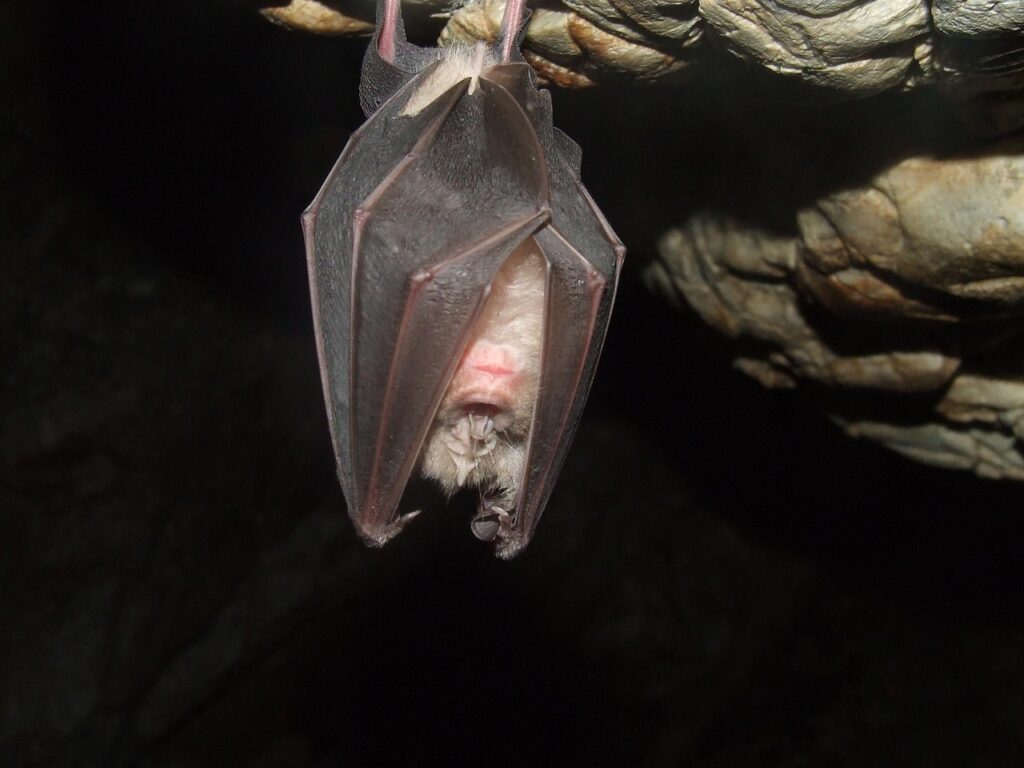
Contrary to their spooky reputation, horseshoe bats aren’t particularly keen on being in the spotlight.
They rely on dark, connected corridors of hedgerows, trees and woodland edges to travel safely between their roosts and feeding grounds. Artificial lighting can disrupt these routes, potentially creating barriers across habitats that have been used for generations.
So, what happens when you introduce new houses, roads, streetlights, security lights, garden floodlights and the occasional neighbour determined to illuminate their entire property like Heathrow Terminal 5?
Well, that’s where the nightmare begins.
Developers can propose lighting strategies, dark corridors and ecological mitigation. But maintaining genuinely dark, functional wildlife corridors through an expanding residential development is rather more complicated than drawing a reassuring green line on a planning map.
After all, bats don’t read planning applications. And they certainly don’t know which side of a proposed development boundary they’re supposed to fly.
The Curse of the Disappearing Corridor
Perhaps the most frightening prospect isn’t one individual development, but the cumulative effect of many.
A hedgerow disappears here. A field is developed there. Another road, another estate, another collection of outside lights.
Each development may promise to protect biodiversity. But who is looking at the bigger picture? Who is ensuring that Warminster’s network of dark corridors remains connected and functional as the town expands?
Because once those links are broken, recreating them isn’t as simple as planting a few saplings and installing a bat box.
And while a Halloween ghost might happily haunt a new housing estate, a Greater Horseshoe bat may find it considerably less welcoming.
A Frighteningly Important Question
The Bath and Bradford-on-Avon Bats SAC is internationally important. The evidence of bat movement towards Warminster raises serious questions about the wider ecological connections that future development must consider.
The Home Farm proposals therefore deserve particularly careful scrutiny, not only for their immediate effects on nearby roosts and habitats, but also for their potential contribution to the gradual fragmentation of a much larger ecological network.
This isn’t about opposing development simply because bats happen to live nearby. It’s about ensuring that planning decisions properly recognise the value of wildlife habitats, the difficulty of mitigating artificial lighting and the long-term consequences of losing connectivity.
Our bats have survived centuries of change. It would be a rather grim trick if modern planning managed to frighten them away for good.
So this Halloween, while the children are out trick-or-treating dressed as bats, spare a thought for the real ones flying above our countryside.
They don’t want sweets. They don’t need costumes. And they certainly don’t need more lights.
They just need somewhere dark to call home.
Happy Halloween from EBBRAG — standing up for Warminster’s wildlife, even the things that go bump in the night! 🦇